


![EOFY [highlight]Special Offer[/highlight]](https://www.ausdirecthire.com.au/wp-content/uploads/2025/04/new-financial-year-special-offer-2.jpg)


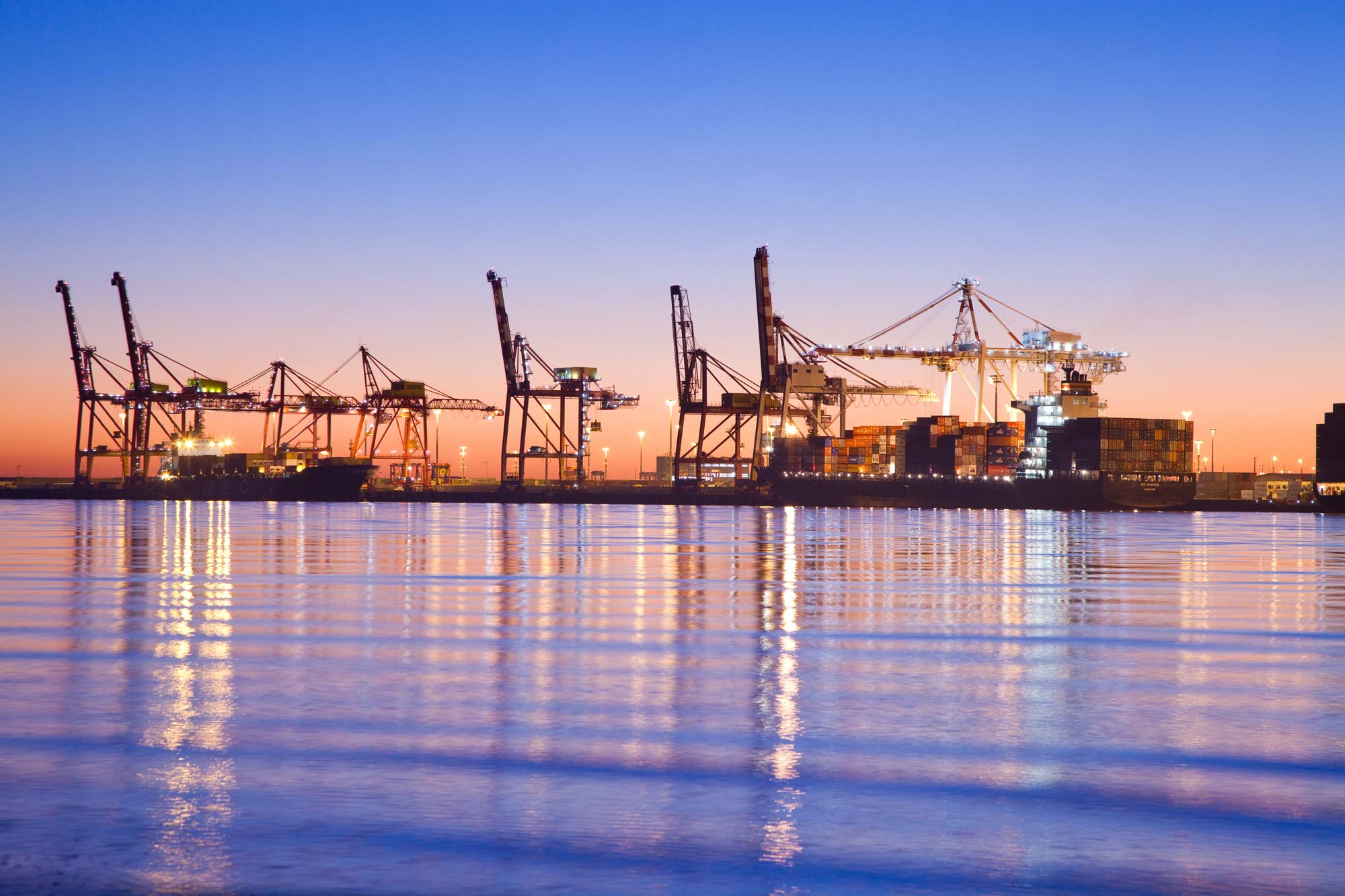
Brisbane’s industrial powerhouse is evolving
Brisbane’s Trade Coast has long been recognised as one of Australia’s most important industrial precincts, but over the past decade its role has changed dramatically. No longer simply a collection of warehouses and manufacturing facilities, it has evolved into a highly connected logistics, aviation, marine and industrial ecosystem that underpins much of South East Queensland’s economic activity.
Stretching from Eagle Farm and Pinkenba through to Murarrie, Lytton and the Port of Brisbane, the precinct is home to thousands of businesses supporting freight, advanced manufacturing, food production, aviation, defence, construction and large-scale distribution. Every day, goods move between ports, warehouses, airports and industrial facilities with remarkable efficiency, supported by contractors working behind the scenes to build, maintain and upgrade the infrastructure that keeps the region operating.
For those contractors, the nature of industrial work has also changed. Projects are becoming more complex, shutdown windows are becoming shorter and clients expect maintenance and upgrades to be completed with minimal disruption to ongoing operations. Labour shortages continue to place pressure on project delivery, while increasingly sophisticated industrial facilities demand more specialised access solutions than ever before.
Against this backdrop, selecting the right access equipment has become far more than a procurement decision. It has become an important part of project planning, influencing productivity, safety, programme certainty and ultimately commercial performance.
Every industrial precinct presents a different challenge
Although often spoken about as a single region, Brisbane’s Trade Coast is remarkably diverse. Understanding these differences is one of the reasons experienced contractors rarely approach equipment selection the same way twice.
In Eagle Farm, projects are often centred around commercial developments, industrial estates and aviation-related infrastructure. Contractors may be installing services within new warehouses one week before moving to façade maintenance or roofing works on neighbouring industrial buildings the next. The variety of construction methods and building types means access requirements can change significantly from project to project.
A few kilometres east, Pinkenba presents a different operating environment. Large distribution centres, freight operators and logistics facilities dominate the landscape, with many sites operating around the clock. Here, contractors frequently work within live warehouses where forklifts, automated picking systems and warehouse staff continue operating throughout maintenance activities. Equipment selection must therefore consider far more than simply reaching the required height. Manoeuvrability, emissions, floor loading and the ability to minimise disruption often become equally important considerations.
Further south, Murarrie combines established industrial facilities with commercial developments and corporate headquarters. Contractors regularly move between internal fit-outs, external maintenance and infrastructure upgrades, requiring equipment that can adapt to changing environments over the course of a single project.
The character changes again in Lytton, where manufacturing facilities, processing plants and fuel infrastructure create one of Queensland’s most demanding industrial environments. Many projects occur during carefully planned shutdowns where every hour carries significant commercial implications. Delays don’t simply affect contractors—they can postpone production, impact supply chains and increase operational costs for the client.
The Port of Brisbane introduces another layer of complexity. Marine infrastructure, container terminals and freight operations require contractors to work within highly coordinated environments where safety, scheduling and reliability are critical. Access equipment often operates alongside heavy vehicles, cranes and active logistics operations, demanding careful planning and dependable performance.
Despite their differences, these locations share one common characteristic: they reward careful preparation. Contractors who understand the operating environment before selecting equipment consistently deliver safer, more efficient projects than those who focus solely on machine specifications.
Productivity begins long before equipment arrives on site
One of the more significant changes in industrial construction over recent years has been the growing recognition that productivity is largely determined during the planning phase rather than on the day work begins.
Experienced project managers no longer treat access equipment as something to organise a few days before mobilisation. Instead, they incorporate equipment planning into the broader construction methodology, considering how machinery will enter the site, where it will be positioned, how it will interact with other trades and whether it can operate efficiently within the constraints of the existing facility.
These discussions often identify issues that would otherwise remain hidden until construction is underway. Restricted access points, limited turning areas, floor loading limitations or conflicts with existing operations can all influence equipment selection. Resolving these challenges during planning is invariably less costly than discovering them once labour, subcontractors and clients are already committed to the programme.
This approach has become increasingly valuable as industrial projects continue to compress programme durations. Where shutdown windows may once have extended over several days, many businesses now expect contractors to complete complex maintenance activities overnight or across a single weekend. In these circumstances, every decision affecting productivity matters.
Choosing equipment that complements the site
One of the most common misconceptions in access equipment selection is that larger machines deliver better outcomes. While greater working height and outreach can certainly be advantageous, they are only two factors among many that determine overall productivity.
A contractor undertaking structural steel installation on an open industrial site may benefit from the reach and flexibility offered by boom lifts, particularly where obstacles prevent direct access beneath the work area.
By contrast, a contractor replacing lighting throughout a distribution centre may achieve substantially better productivity using compact electric scissor lifts. Their smaller footprint, quiet operation and zero-emission powertrain allow work to proceed with minimal disruption to warehouse activities while providing a stable working platform for repetitive tasks.
Where materials also need to be lifted into position, telehandlers can often reduce handling time by combining access with material placement, eliminating the need for additional lifting equipment on smaller projects.
The most productive solution is rarely determined by a single specification. It emerges from understanding how equipment will interact with the site, the workforce and the programme as a whole.
Reliability has become a commercial advantage
When discussing access equipment, conversations often focus on working height, outreach or lifting capacity. While these are obviously important, experienced contractors know that reliability is often the specification that matters most.
Across Brisbane’s Trade Coast, projects are increasingly delivered within tightly controlled programmes where delays quickly cascade through multiple trades. A maintenance shutdown that overruns by several hours may delay commissioning, postpone production or extend contractor labour well beyond what was originally budgeted. On logistics sites, even relatively short interruptions can affect freight schedules and warehouse throughput, creating costs that far exceed the daily hire rate of a machine.
This is one of the reasons many contractors now assess equipment hire providers differently. Fleet age, preventative maintenance programmes, equipment servicing capability and the ability to respond quickly when circumstances change have become important procurement considerations. Businesses aren’t simply hiring equipment—they’re reducing the risk of costly interruptions.
From a project management perspective, reliable equipment creates confidence. It allows supervisors to schedule work knowing the machine is likely to perform as expected, while reducing the contingency time often built into programmes to accommodate unexpected breakdowns or replacement delays.
For projects operating within narrow shutdown windows, that confidence has genuine commercial value.
The best equipment decision is often the least obvious one
Consider a contractor engaged to upgrade lighting within a large Pinkenba distribution centre.
On paper, a diesel boom lift appears to be the logical choice. It provides generous working height, excellent outreach and can reach almost every location within the warehouse. Yet once the operational environment is considered, the decision becomes less straightforward.
The warehouse remains fully operational throughout the project. Forklifts move continuously through designated aisles, automated picking systems remain active and hundreds of orders leave the facility each day. Every interruption affects productivity, not only for the contractor but for the client as well.
Rather than introducing a large boom lift into this environment, the project team may instead deploy several compact electric scissor lifts positioned strategically throughout the warehouse. Multiple technicians can work simultaneously, equipment can be relocated quickly between work areas and warehouse operations continue with minimal disruption.
The overall project may finish earlier, involve fewer traffic management controls and have less impact on the client’s business—even though the equipment selected appears less capable when viewed purely on technical specifications.
This is a useful reminder that equipment selection is rarely about choosing the biggest machine. It is about choosing the machine that enables the project to operate most efficiently.
Flexibility is changing the economics of equipment ownership
Industrial workloads across Brisbane rarely remain consistent for long.
A contractor may spend several weeks undertaking warehouse maintenance in Pinkenba before moving to a commercial development in Eagle Farm, followed by shutdown works in Lytton or infrastructure upgrades near the Port of Brisbane. Each project demands different working heights, lifting capacities, ground conditions and operational requirements.
Maintaining a fleet capable of servicing every possible application is increasingly difficult to justify. Beyond the initial capital investment, ownership introduces ongoing costs associated with servicing, inspections, transport, storage, compliance and depreciation. Machines sitting idle between projects continue to consume resources without contributing to revenue.
As a result, many contractors are shifting their thinking. Rather than viewing equipment hire as an occasional necessity, they are incorporating it into broader business strategy. Flexible hire enables businesses to access the most suitable machine for each project while preserving capital for investment in people, technology and business growth.
In an environment where workloads fluctuate and project requirements continue to evolve, flexibility has become a competitive advantage in its own right.
Brisbane’s industrial future is creating new opportunities
The long-term outlook for Brisbane’s Trade Coast remains exceptionally positive.
Continued investment in logistics, aviation, advanced manufacturing and port infrastructure is driving demand for new industrial facilities and upgrades to existing assets. Population growth across South East Queensland, expanding freight volumes and major infrastructure investment leading into the Brisbane 2032 Olympic and Paralympic Games will place additional pressure on industrial networks throughout the region.
At the same time, industrial buildings themselves are changing. Warehouses continue to grow taller, automation is becoming increasingly common and manufacturing facilities are incorporating more specialised equipment and production technologies. These developments create more sophisticated access requirements, requiring contractors to think carefully about how work will be completed safely and efficiently.
Labour shortages add another layer of complexity. Finding additional workers is becoming increasingly difficult, making productivity improvements one of the few levers contractors can still control. Better planning, more appropriate equipment selection and improved coordination between trades all contribute to completing more work with the resources already available.
The businesses that thrive over the next decade are unlikely to be those with the largest equipment fleets. More likely, they will be the organisations that consistently select the right equipment, deploy it effectively and integrate it into well-planned project delivery.
More than equipment hire
There has been a noticeable shift in what contractors expect from equipment hire companies.
Price remains important, but it is rarely the deciding factor on complex industrial projects. Contractors increasingly value practical advice, responsive communication and a supplier that understands the realities of working within Brisbane’s industrial precincts. They want confidence that the recommended machine will suit the application, arrive when promised and perform reliably throughout the project.
This is where local knowledge makes a genuine difference. A hire partner familiar with the operational characteristics of Eagle Farm, Pinkenba, Murarrie, Lytton and the Port of Brisbane can often anticipate challenges before they arise. They understand the importance of coordinating deliveries around busy freight movements, selecting equipment that minimises disruption within operational facilities and responding quickly when project requirements change unexpectedly.
Ultimately, the relationship becomes less about hiring a machine and more about supporting successful project delivery.
Keeping Brisbane’s Trade Coast moving
Brisbane’s Trade Coast is one of Australia’s most dynamic industrial regions, and its importance will only continue to grow. As facilities become larger, projects become more complex and delivery programmes become tighter, equipment decisions will play an increasingly important role in determining project outcomes.
For contractors, the objective is no longer simply to reach the work area safely. It is to complete work efficiently, minimise disruption to surrounding operations and maintain programme certainty in environments where every hour matters.
Selecting the right access equipment—and working with a hire partner who understands the unique demands of Brisbane’s industrial sector—can make a measurable difference to productivity, safety and commercial performance.
Whether you’re delivering a warehouse upgrade in Pinkenba, a manufacturing shutdown in Lytton, commercial works in Eagle Farm or infrastructure projects near the Port of Brisbane, Ausdirect Hire provides modern, reliable access equipment backed by responsive local support and practical project expertise. By helping contractors choose the right solution for each application, we aim to reduce downtime, improve efficiency and keep projects moving across Brisbane’s busiest industrial corridor.