


![EOFY [highlight]Special Offer[/highlight]](https://www.ausdirecthire.com.au/wp-content/uploads/2025/04/new-financial-year-special-offer-2.jpg)


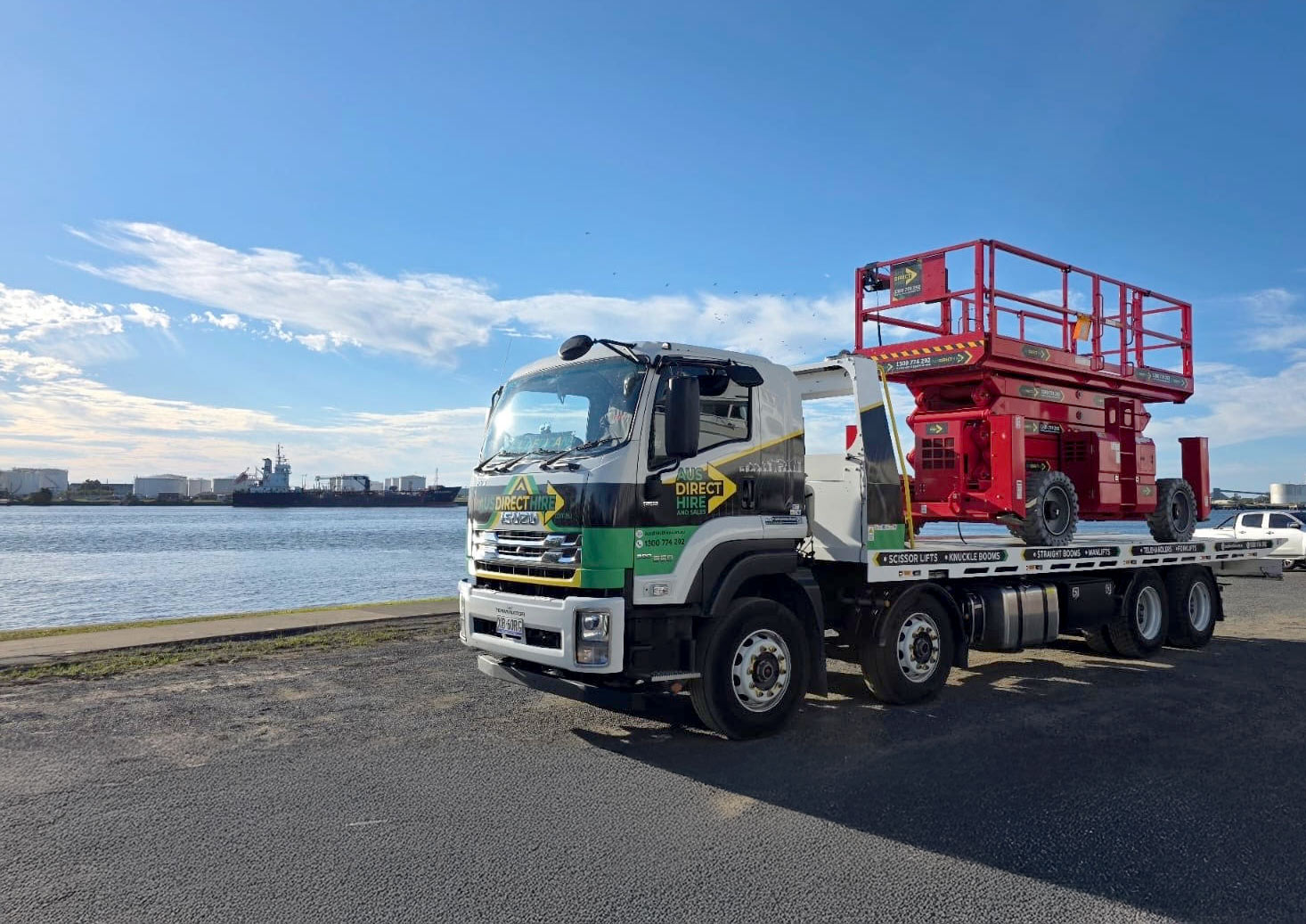
The hire industry for access and material handling equipment has come a long way. What began as basic lifting devices and simple mechanical platforms has evolved into a fleet of highly engineered, safety-focused machines designed to improve efficiency, reduce risks, and tackle complex site challenges. From construction and warehousing to maintenance and events, equipment like scissor lifts, telehandlers, and forklifts has transformed how we work at height and move heavy loads.
Early Beginnings: Manual Systems and Basic Lifts
Before powered lifting machinery became common, work at height relied on ladders, scaffolding, and rudimentary hoists. These methods were labour-intensive, slow, and carried significant safety risks. In warehouses, heavy loads were shifted with pallet jacks or crude mechanical lifts, efficient for the time, but limited in height and capacity.
The Rise of Powered Forklifts
The forklift’s rise in the mid-20th century changed material handling forever. Initially developed for military logistics in World War II, forklifts became essential in manufacturing, shipping, and warehousing. The early petrol and diesel models offered basic lifting capabilities, but as demand grew, so did the variety of mast designs, lifting capacities, and operator comfort features. Electric forklifts followed, making them ideal for indoor environments.
Scissor Lifts: Safer, Faster Work at Height
By the 1970s and 1980s, scissor lifts began replacing ladders and scaffolding on many worksites. These hydraulic-powered platforms offered a stable, elevated workspace with the ability to lift tools and materials alongside workers. Over time, manufacturers improved lift height, platform size, and mobility, while also introducing battery-electric models for indoor or emission-sensitive projects.
Telehandlers: Versatility on the Jobsite
The introduction of telehandlers brought unprecedented versatility to construction and agricultural sites. Combining the reach of a crane with the load capacity of a forklift, telehandlers quickly became popular hire equipment. Early models were relatively basic, but modern telehandlers now feature 360° rotation, precision joystick controls, multiple attachments, and load management systems for safer operation.
Modern Advances: Telematics, Safety, and Sustainability
In recent decades, the hire industry has embraced technology to improve machine performance and operator safety. Today’s scissor lifts, forklifts, and telehandlers often include:
- Telematics systems for real-time tracking, maintenance alerts, and usage reporting.
- Enhanced safety features such as tilt sensors, overload alarms, and automatic braking systems.
- Ergonomic designs to reduce operator fatigue and improve productivity over long shifts.
The Future of Access & Material Handling Hire
Looking ahead, expect to see more automation and AI in hire fleets. Semi-autonomous forklifts are already operating in large warehouses, and remote-controlled telehandlers are being trialled on busy worksites. Battery technology will continue to improve, offering longer runtimes and faster charging, while safety regulations will drive even smarter onboard systems.
From basic manual lifts to today’s high-tech, safety-focused machines, the evolution of access and material handling hire equipment has transformed worksites across industries. For businesses, hiring scissor lifts, telehandlers, and forklifts means gaining access to cutting-edge technology without the capital expense, ensuring every job is done faster, safer, and more efficiently.